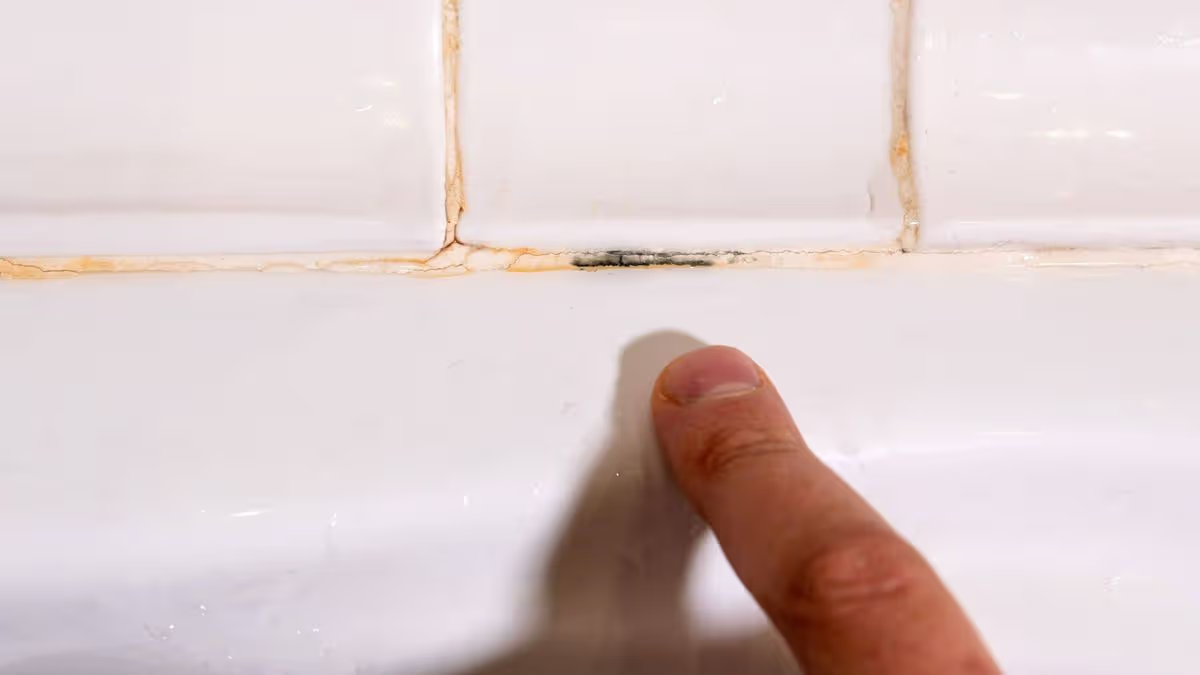
Mold on your silicone sealant can be a real pain to remove, but this 65p natural ingredient is an effective method of banishing those stubborn black spots for good

The natural remedy is very effective in the fight against silicone sealant mold(Image: Getty)
Showers, bathtubs, windows – these fixtures are all equipped with silicone sealant, a type of adhesive used to form an airtight and waterproof barrier where two surfaces meet.
These places also tend to experience damp and wet environments along with accumulating soap scum – the ideal recipe for mold to flourish.
Cleaning specialists at Drench state, “Silicone sealant can be a haven for mold due to its porosity and use in areas that are regularly exposed to water. “Mold in silicone is not only an eyesore, but it is also bad for your health.”
Additionally, mold growth on silicone sealant eventually causes it to turn black, making it unsightly, reports The Express.
While there are several mold sprays sold in supermarkets that help remove these dark marks quickly, more often than not they contain bleach, which is not always the optimal and safest choice.
Fortunately, there are incredibly budget-friendly natural solutions that prove effective in tackling mold elimination on silicone sealant.
One such natural solution to fight mold costs just 65p and is hailed as one of the best methods to solve the problem – fast.
A 200g packet of baking soda or soda costs just 65p in Tesco and is a brilliant pantry essential to use in your fight against mold and to eradicate the dark spots it creates on the silicone seal.
British sealant specialists GT Sealants have shared their ultimate trick for tackling black mold on silicone sealant, describing it as a ‘pretty easy’ method that relies on the humble bicarbonate of soda.
65p silicone sealant remover
The caulking professionals explain that the solution is as straightforward as whipping up a bicarbonate of soda. Describing it as an “excellent, convenient and inexpensive” item to use, they detail how mixing baking soda with water is the “solution, they outline how combining bicarbonate of soda with water is “perfect for removing black mold.”
To get your pasta just right, simply measure out two or three teaspoons of baking soda and mix it with a cup of room temperature water until you achieve a smooth, even consistency.
Then use a cloth to take out a small amount of the paste and apply it directly to the affected moldy spots on your silicone sealant.
It is advisable to wear rubber gloves during the entire process, as direct contact with moldy surfaces is best avoided.
Once the paste is in place, let it sit for a minimum of five minutes. For improved results, cover the grout with cling film to lock in moisture and maximize the paste’s effectiveness.
After about five to ten minutes, remove the cling film and scrub away the black mold with a stiff brush or even an extra toothbrush.
Finally, wet a sponge with cold water and rinse the sealant thoroughly, making sure all traces of mold have been treated by the paste. The procedure may need to be repeated several times if the mold marks prove to be particularly stubborn and refuse to disappear immediately.
Don’t worry, as silicone is inherently designed to be durable and hard-wearing, meaning the mold may be a bit more tenacious than expected. Several applications should nevertheless achieve the desired result.
Although it may be tempting to assume that the application of the paste will produce immediate effects, this is actually not the case. The specialists explain: “The baking soda mixture needs a little time to settle on the black mold and do its job.”
Once all the black mold has been thoroughly removed from the compromised silicone seal, it is important that you do not forget to wipe the silicone dry with a dry towel or cloth.
Often people tend to overlook or choose to bypass this stage in their rush to complete the task. But when left wet and moisture-laden, you simply invite the mold to develop repeatedly.
The specialists emphasize that drying the silicone “prevents more mold from forming”.