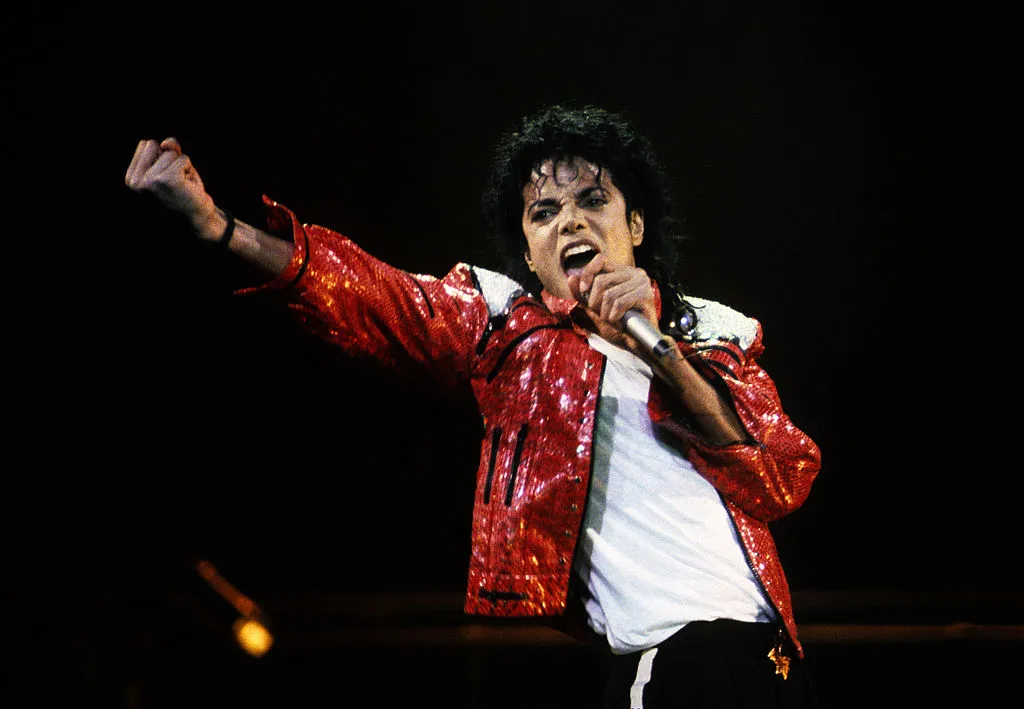
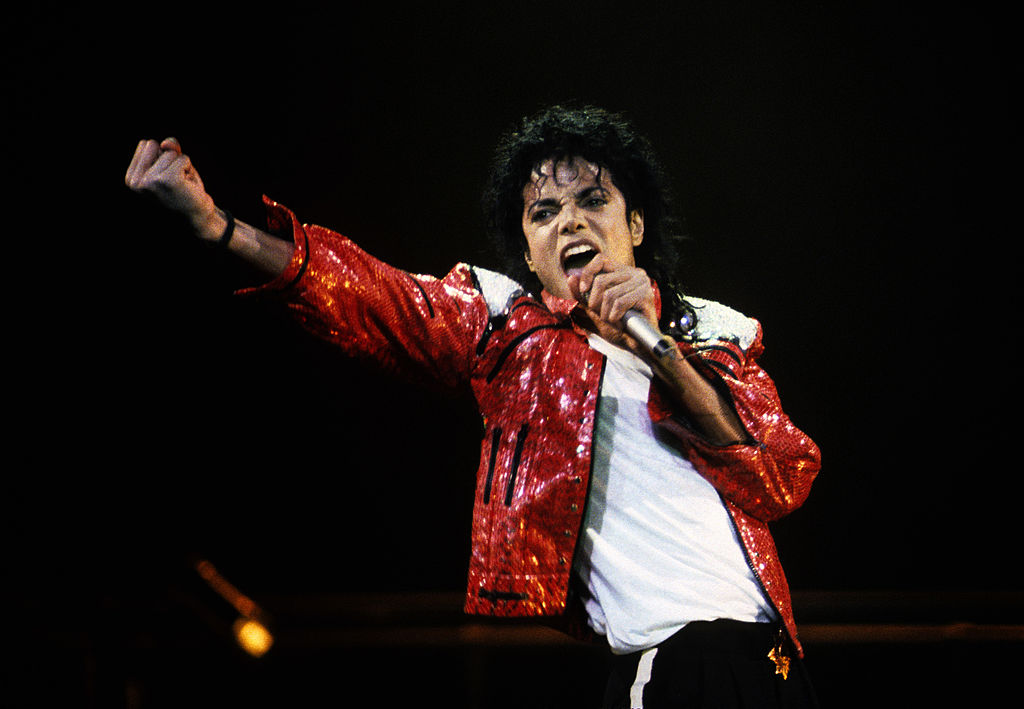
Black Music Month wouldn’t be complete without honoring the influence of the King of Pop, Michael Jackson. From helping Motown become an international sensation to becoming the greatest entertainer of all time, the black boy from Gary, Indiana changed the way the world heard and saw music forever.
Source: Kevin Mazur / Wireimage
Michael Jackson burst onto the scene in 1969 with his brothers Jermaine, Jackie, Tito and Marlon when their debut single “I Want You Back” became an international sensation.
Five black boys rocking afros and the popular fashion of the late 60s and early 70s quickly redefined what it meant to mix exceptional talent with superstar charisma and charm. Although all the brothers were musical protégés, it was 11-year-old Michael, whose exceptional vocals, precision in choreography and immense ability to express the themes of love, longing and loss at such a young age, catapulted their appeal to meteoric heights.
When asked what he saw in the young Michael before signing him, Motown founder Berry Gordy told NPR,
“Everything. That’s the simple answer. When he auditioned for me that morning, he was forced on me by my assistant (unintelligible) because I didn’t want a group of kids, because I’d been with Stevie Wonder with his entourage and teachers and tutors and all that, and when she brought them to me, I didn’t want to see them. But once I saw them, I saw them pressing the video, because I knew they started pressing my camera. something so special, mainly because of the lead singer, nine-year-old Michael Jackson, and it was just so obvious to me that he was a star.
The Jackson 5 would become the first group ever to have their first four singles reach No. 1 on the charts. Cartoons, merchandise and sold-out tours would soon follow their musical successes, and Michael’s talent would continue to awe audiences as he drew comparisons to greats such as James Brown, Jackie Wilson and others.
The magic Michael created with his brothers under the guidance of the magicians of Motown seemed insurmountable until 1979, when the 21-year-old collaborated with sound architect Quincy Jones and released his first solo album Off The Wall. Michael fused his soul roots with the influence of disco to create a sound that felt authentic and timeless. The record produced two No. 1 hits in “Don’t Stop Till You Get Enough” and “Rock With You,” the former of which won him the Best R&B Vocal Performance Grammy in 1980. Jackson became the first solo artist to have four singles from the same album become top 10 hits in the same year.
Off The Wall’s The visuals for the most popular tracks would also set the stage for what would become known as Michael’s signature style. On the album’s cover, the fashion icon wore a tailored black suit with white sequined socks and black shoes, a look that would later be copied by everyone from his younger sister and pop icon Janet Jackson to Janelle Monae, Chris Brown and The Weeknd. The rhinestone outfit Michael wore in the “Rock With You” video, designed by Bill Whitten, would also become a cultural moment with millions of rides sold worldwide. But it was Jackson’s vocal arrangements and genre-bending tracks Off The Wall that would make it the blueprint for artists born generations after its release.
“I found my falsetto, because Off the Wall (and) “Don’t Stop ‘Til You Get Enough,” The Weeknd said of the album’s influence on his sound. “I always use Michael (Jackson) as first and foremost a vocal inspiration, and Off the Wall was definitely the one who made me feel like I could sing.”
If Off The Wall ignited the flame of Jackson’s solo fire, his follow-up second album Thriller blew the roof off it. Released in 1982, Thriller was backed by the industry-changing 14-minute video created by Michael and director John Landis, and became the singer’s first Billboard No. 1 album, a spot it held for 37 consecutive weeks. It produced seven Top 10 singles, a record still held by Jackson decades later, and would go on to win eight Grammy Awards en route to being named the best-selling album of all time, selling 70 million albums and counting to date.
“I think we’re powerful, but we’re not using our minds to our full capacity,” Michael said of redefining the music industry with the release of Thriller. “Your mind is power enough to help you achieve what you want. I knew what we could do with that record. We had a great team there, a lot of talent and great ideas, and I knew we could do anything. The success of ‘Thriller’ turned many of my dreams into reality.”
Although the album’s title track and accompanying visuals were a hoot; it was the album’s second single “Beat It,” a plea from Jackson to stop escalating gang violence that would change music video history forever. MTV’s refusal to play videos by black artists would end in January 1983, when the channel debuted the “Beat It” visual as a “short film,” under threat from then-CBS president Walter Yetnikoff, according to Billboard. Michael’s videos would help the network become the cultural imprint that it would continue to be.
“We grew nicely in our first few years, but Michael Jackson put MTV on the map,” MTV co-founder John Sykes said of Michael’s influence and power. “There were very few VCRs out there at the time, and we heard that people would set their alarm clocks in the middle of the day to turn on MTV and catch the ‘Thriller’ video. We saw our ratings for the channel shoot through the roof. Every time we played it, we’d see the ratings double or triple.”
It wasn’t just Michael’s talent that made his music videos canon events of their own, it was also his vision to use the latest in technological advancements to help tell stories. He would use everything from the glowing tiles in the “Billie Jean” video to the hyper-realistic face sculpting of the 1991s Black or whiteJackson led the way in innovation, inspiring artists and record companies to invest in music videos to help push singles’ success.
In the 90s, Michael Jackson mania had reached a fever pitch with MJ’s style, sound and personal image becoming the biggest fire on earth. His celebrity level would be on full display when he would collaborate with other big stars of the era, eclipsing them in the shadow of his popularity. Celebrities such as Michael Jordan, Naomi Campbell, Iman, Magic Johnson and even Princess Diana would be seen attending his concerts, participating in his music videos and publicly punching the Pop idol. He had also proven that he had what it took to seamlessly move through any musical age; bringing his own style to genres like New Jack Swing and hip-hop without missing a beat.
Despite a never-ending cycle of media attention – sometimes more negative than positive – the mystery surrounding Michael Jackson helped fuel the demand for more of him, both musically and visually. Whenever he appeared anywhere in the world, fans came out in droves just to catch a glimpse of him. Musically, he created an entire ecosystem of artists including Beyoncé, Usher, Ne-Yo, Ciara and the aforementioned Chris Brown. His image and dance moves are still the blueprint for modern choreography with genres like K-pop copying and inserting to new audiences. Nevertheless, as time goes by, Michael Jackson’s influence has stood the test of time as his fan base now includes people who were never alive to experience his greatness first hand, but can revisit at any time thanks to the internet.
“When I was just starting out, my first producer used to make me listen to Michael Jackson’s live performance of “Who’s Loving You,” Beyoncé wrote about Michael on the 5th anniversary of his passing.What he wanted me to learn was his soul. You could hear his soul. And he was this little kid who hadn’t experienced love, but he was a vessel. For some reason, he could evoke more emotions than an adult. It was so raw and so clean. It was these little things he did that were just swag. It is something that God has given.
Michael taught me that sometimes you have to forget the technique, forget what you’re wearing. If you feel stupid, get off your stomach, just don’t.
Michael Jackson changed me and helped me become the artist I am, thank you Michael.“
Today, Jackson remains the best-selling artist of all time with over 500 million albums sold worldwide…and counting. Biopic about his life, Michaelhas crossed the billion mark after being in theaters for a month; proving once again that there are plenty of stars, but there is only one Michael Jackson.