Nice white dress. Beautiful flowers. Decorated, layered cake. And a handsome Prince Charming waits at the end of the aisle and declares his eternal love for you in front of an adoring crowd with tears in his eyes. Here comes the bride.
For generations we have sold little girls this dream of a “fairytale wedding day” as the #1 romantic aspiration for “successful” womanhood. Despite all the “till death do us part” giddiness (and, as published in The Wedding Reportthe $60 billion wedding industry that relentlessly perpetuates it), the national marital divorce rate, According to the CDC, fell slightly to 41 per cent.
And despite the promise of your “happily ever after” waiting at the altar, it turns out that couples who avoid big weddings have happier marriages.
Research shows that the more a couple spends on their wedding, the less happy their marriage is likely to be
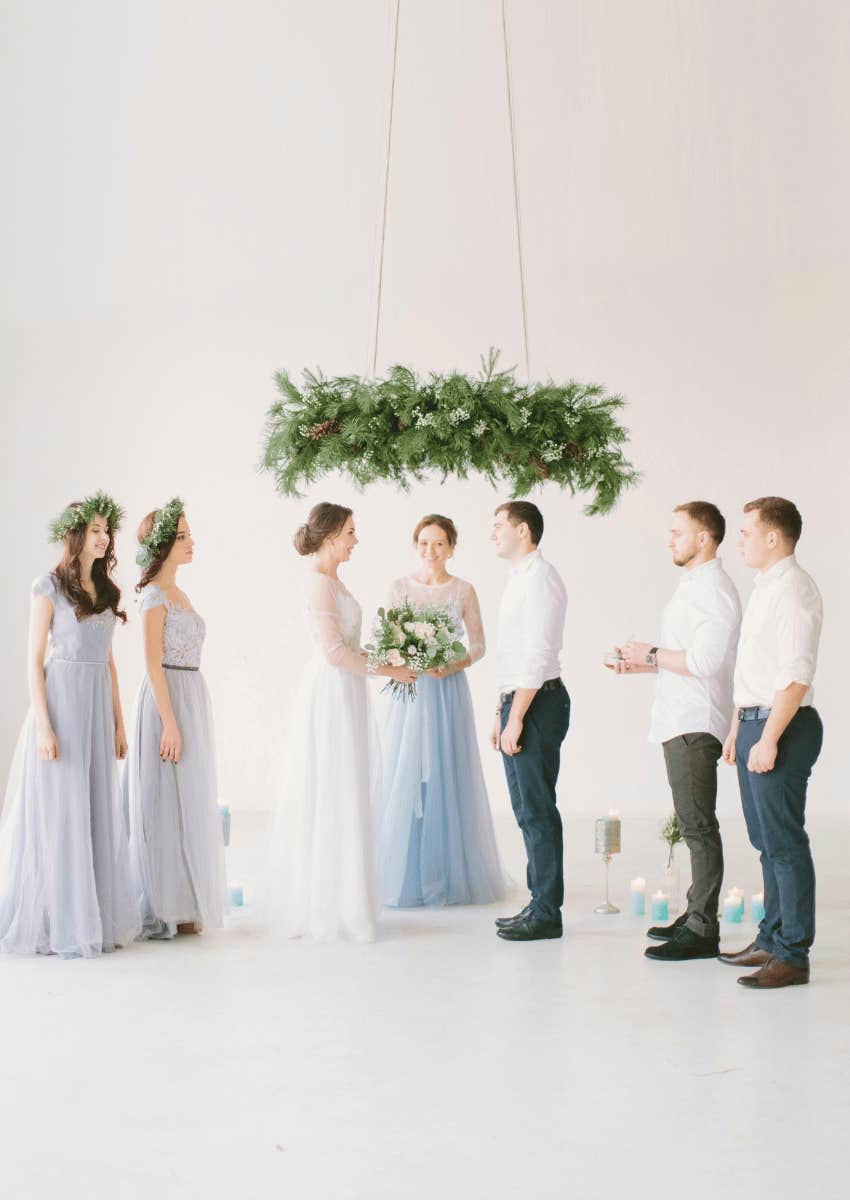 Getty Images/Unsplash+
In 2014, Emory University economists studied more than 3,000 married adults with the goal of testing the wedding industry’s standing claim that spending more leads to stronger marriages.
What they found countered that: Their research showed that couples who spent over $20,000 on their wedding were 1.6 times more likely to divorce than couples who kept a budget of $5,000-$10,000, and even more interestingly, couples who spent under $1,000 had the lowest divorce rate of the entire study sample.
And there is also more interesting marital research: This is shown by a study by The American Sociological Associationwomen initiate two-thirds of divorces, with 37 percent of them admitting they felt serious doubts on their wedding day about whether they were ready for the commitment or whether they were marrying the right person.
Why did they go through with their something borrowed-something blue “I do” then? Many women said they felt “significant external pressure” from parents, peers, their partners or societal expectations, or they believed they would not find anyone else to marry.
In short, they believed that having the socially desirable status of being married, even unhappily, was better than not being married at all. Which begs the question: Why do we keep selling our daughters this outdated fairy tale?
For everyone the progress made for women in the world, why is a wedding still the only socially valued ritual our girls have to look forward to? Think about it.
- A wedding is the one time in a young woman’s life when everyone she knows (plus one) happily shows up, even flies in from overseas, for her special day.
- A wedding is the one “lifetime achievement” in which friends and family willingly, collectively and extravagantly invest their time and money.
- A wedding is the only occasion where we dress our daughters up beautifully and publicly shower them with gifts, advice and attention.
Is it any wonder that a girl dreams of her wedding day all her life? So much so that when her inner voice warns that she’s not ready for the lifelong commitment that looms after the fancy ceremony ends, she often swallows that truth and goes ahead anyway. She goes ahead with the plan just to make her experience the unique love, attention and support of an all-about-me day.
But if the traditional fairy-tale wedding ritual doesn’t specifically contribute to our daughters’ actual marital happiness (and the pressure to hold a wedding even encourages some women to deliberately marry unhappily), perhaps it’s time we separate the two and create a new rite of passage that a young woman dreams of from girlhood, one that might better prepare her for relationship success if she ever chooses to break up.
What might a reimagined wedding ceremony look like?
Well, actually not that far off from a standard wedding if it’s the fairytale dream experience that little girls really long for (although I’m not convinced it is). Only instead of our daughters worth being celebrated for (finally) being chosen and deemed worthy of love by another, the “I’ve dreamed of it since I was a little girl” rite of passage in every young woman’s life would become a ceremony where friends, family and community come together to celebrate her public commitment to honor and cherish herself.
Instead of fathers ‘giving their daughters away’ to another man to take care of, imagine proud parents hugging their daughter and symbolically sending her out into the world, confident that they have prepared her to stand on her own two feet.
Imagine if bridesmaids became a young woman’s soul circle, serving as a core group of special friends who promise to serve as positive reflections of a young woman’s light, strength, and beauty as she journeys into a world that is often discouraging and harsh. (And hey, they force girlfriends everyone dresses in expensive, matching taffeta dresses is still optional if that’s your thing.)
What if, instead of witnessing vows between a couple, guests gathered around a young woman to witness her public declaration of her commitment to stay true to her values, her goals, her integrity, and to honor herself? Imagine showering such a girl with gifts to help her start her new life, whether it’s a toaster for her new apartment or luggage for her internship abroad.
Would such a wedding ceremony maintain a certain status?
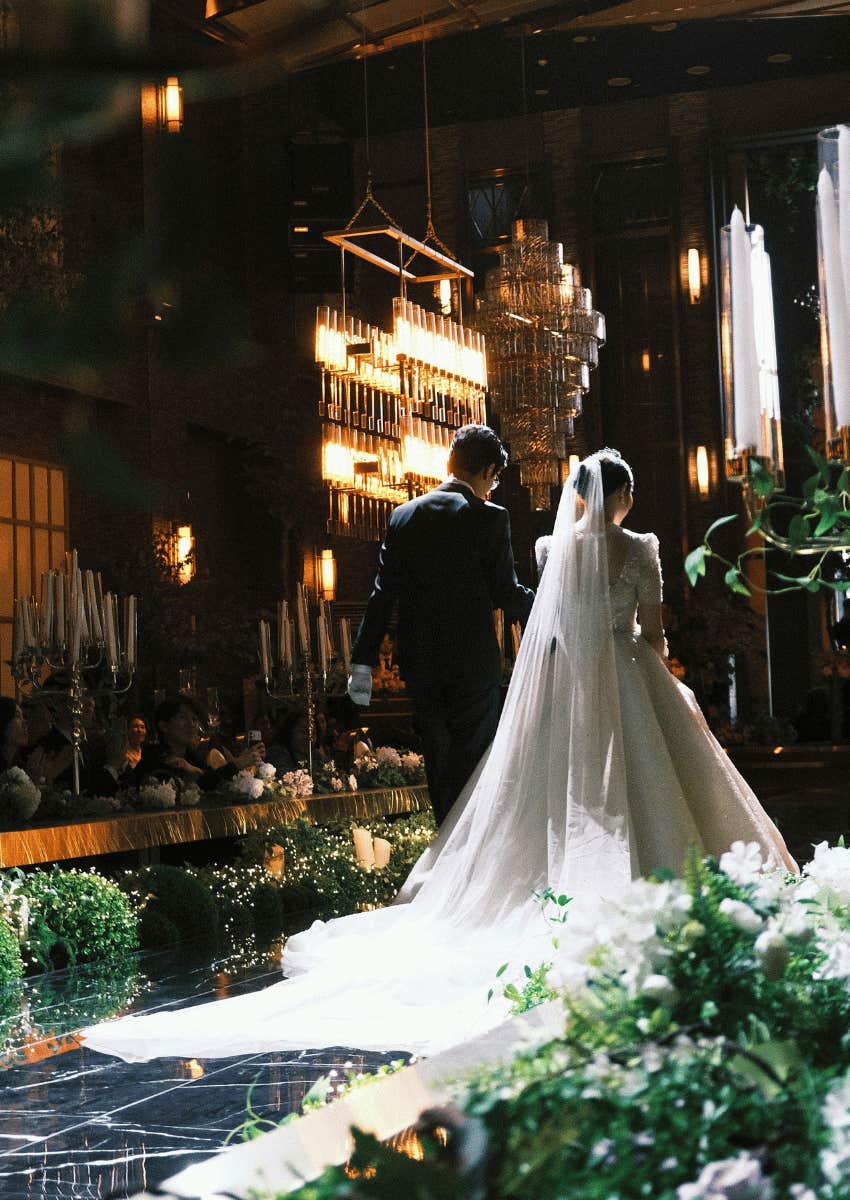 Hazel J / Unsplash
Sure the $60 billion wedding industry had to find something new to occupy themselves with, but if “I want the coolest party of them all” is her goal, go for it. Puffy dress, flower bouquets, 3-tier cakes, bring it all.
Or the maid of honor can wear some other special outfit that shows off her unique style and beauty. She can decorate the room with pesticide-free roses if she wants. And serve a buffet of sugar-free, gluten-free and dairy-free culinary delights, if that’s important to her.
The point is that the day is about her. It’s about giving our daughters a celebratory rite of passage where they feel endlessly seen, celebrated and special while honoring their journey to move forward to discover and become more of who they really are.
A young woman who first spends time in the world committed to truly being herself is far better prepared to make healthy choices about eventually entering into a committed partnership with someone else later.
Does that mean no wedding ceremonies ever?
No, of course not. If a couple mutually chooses to have some sort of wedding ceremony to share their commitment and love with the world, more power to them. But it is worth considering how marriages can be more successful if they are entered into with open eyes and with the pomp and pageantry of a traditional wedding ceremony removed.
How many couples would still choose to legally say “I do” if we as a society focused on the sweet but serious commitment they make on the big day as opposed to their wedding theme colors?
If we let the romance and weight of the precious vow shift to something couples exchange privately and celebrate subtly, would our girls still rush into it? After all, it’s up to the couple on their own to keep their promises long after the $80-a-person guests. plate has gone home.
Would marriage rates fall? Quite likely. But with the average wedding costing $30,000 and the average divorce costing $15,000 to $20,000. I am personally all for fewer marriages entered into prematurely or with uncertainty.
Statistics from the CDC shows that couples who wait until after age 25 to marry are 24 percent less likely to divorce, reduced even more by those who delay child-rearing, get a college education, and achieve a level of financial security and self-confidence before marriage.
Yes, couples who take time to find out who they are, take time to experience life, and learn to face the realities of standing on their own two feet are far better able to approach marriage with the maturity it requires.
So if marital happiness and stability is truly what we want for our daughters, perhaps the best way to support that outcome is to stop saving for her wedding and start spending that money and effort investing in her.
Cris Gladly is an author, speaker and connection strategist with a passion for positive human relations. She writes locally about food, travel and community; writes nationally on love, relationships, social change and parenting; and is an independent global consultant helping integrity-centric brands and individuals powerfully transform the way they position themselves and build connections with others.